Case study 03 · DUBAI POLICE
Four journeys - resident, visitor, overseas guest and business - behind one adaptive front door, built on UAEPASS.
- ROLE
- Senior UX/UI Designer
- CLIENT
- Dubai Police GHQ
- TIMELINE
- 5–7 Months
- SCALE
- 4 user types · Web + Mobile

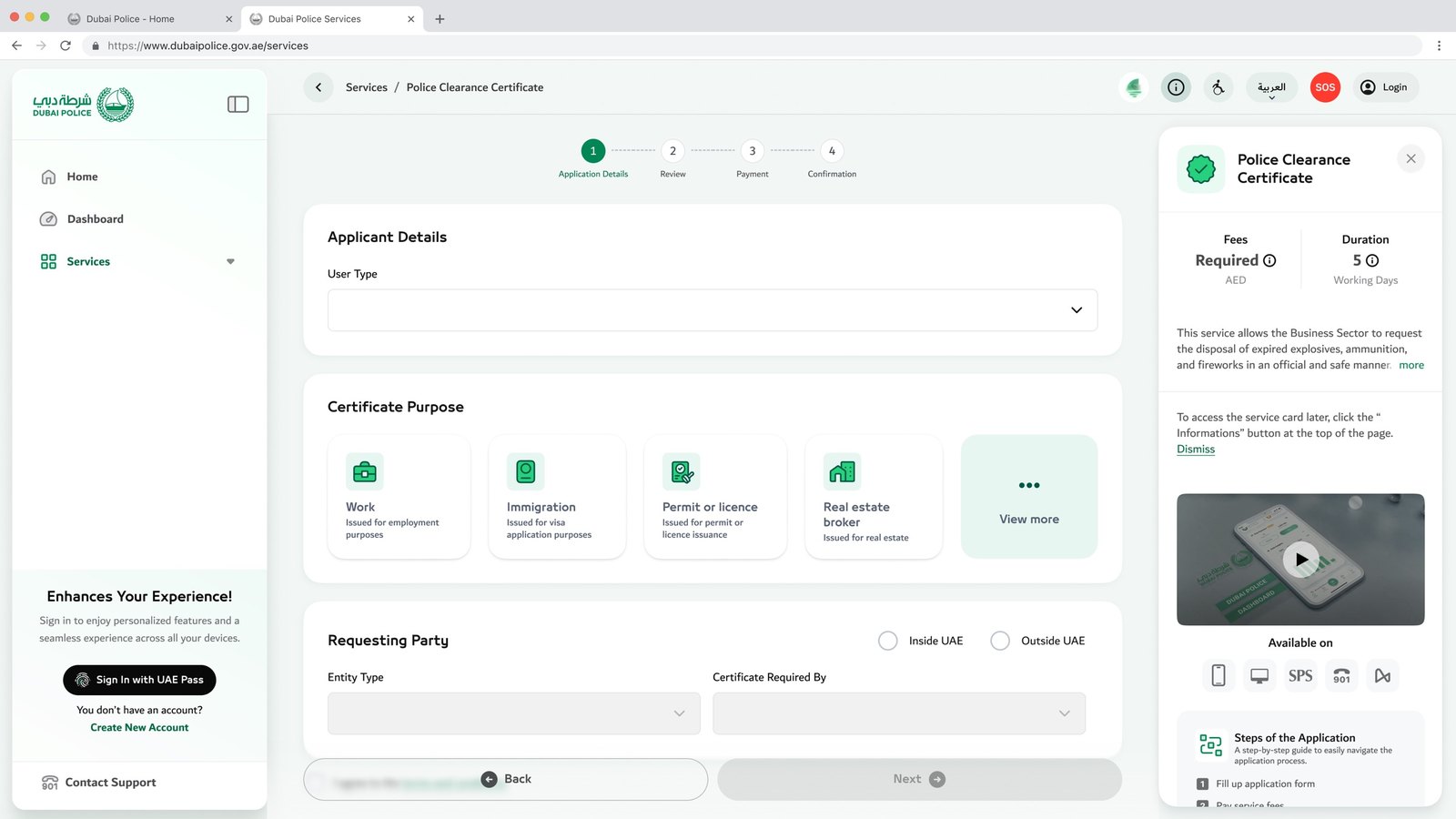
Police Clearance Certificate application - purpose-first form with a four-step progress bar
01
The briefReplace one rigid flow with one adaptive architecture that serves four fundamentally different applicant journeys.
02
The researchUnderstanding who actually applies.
- 01
User Type Analysis
4 profiles · identity matrix
- 02
Service Blueprint
End-to-end · 5 friction points
- 03
Stakeholder Interviews
11 sessions · 4 journeys
- 04
International Benchmark
5 portals · 8 criteria
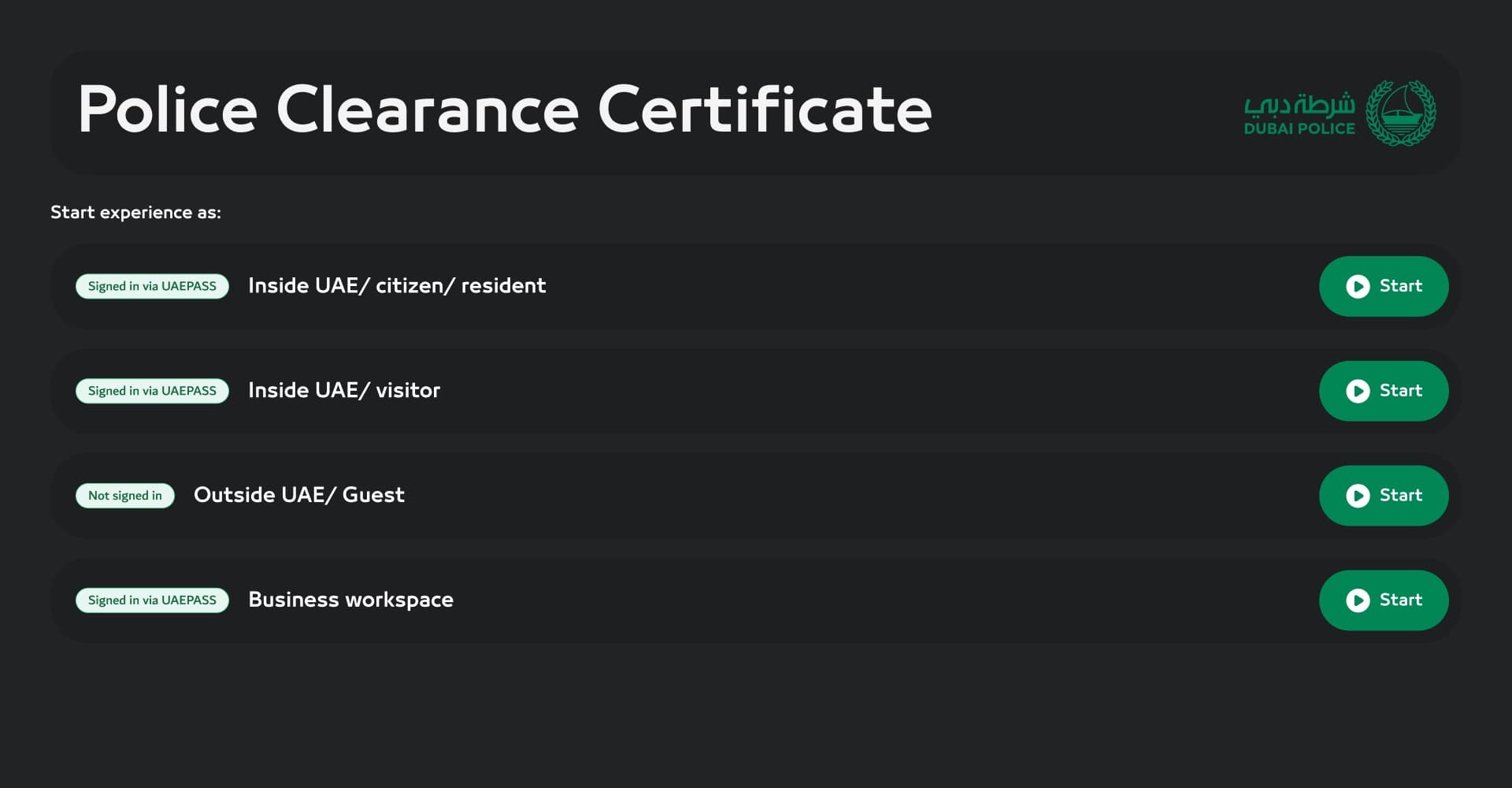
03
Key design decisionOne adaptive front door.Not four separate portals.
Engineering wanted four parallel portals. Product wanted to keep one rigid flow with conditional fields. Both were UX traps. The third path: identity routes the user.
Four portals
four codebases · four design systems
One rigid flow
conditional fields · UX trap
One adaptive entry
identity + location route the applicant
One service, four journeys - routed by who you are and where you're applying from.
04
Flagship craftBilingual document design.Where identity lives.
- 01Legal terminology · not translation
- 02Dual calendar · Gregorian + Hijri
- 03Names in source script
05
The solutionFour journeys.One shared system.
Citizen & resident
Inside UAE · UAEPASS pre-filled
Visitor
Inside UAE · UAEPASS + fingerprint step
Overseas guest
Outside UAE · no sign-in required
Business workspace
UAEPASS · dashboard + company account
Purpose-first form
Work · immigration · permit · real estate
Inside / outside routing
Requesting party reshapes the form
Document checklist
Passport, photo, prior residency
Four-step flow
Details → review → payment → confirmation
06
Journey by journeySame service.Different path.
The step sequence itself adapts - a visitor books a fingerprint appointment, an overseas guest proves identity through documents, a resident skips both.
- 01
Citizen & resident
Inside UAEUAEPASS- Details
- Review
- Payment
- Confirmation
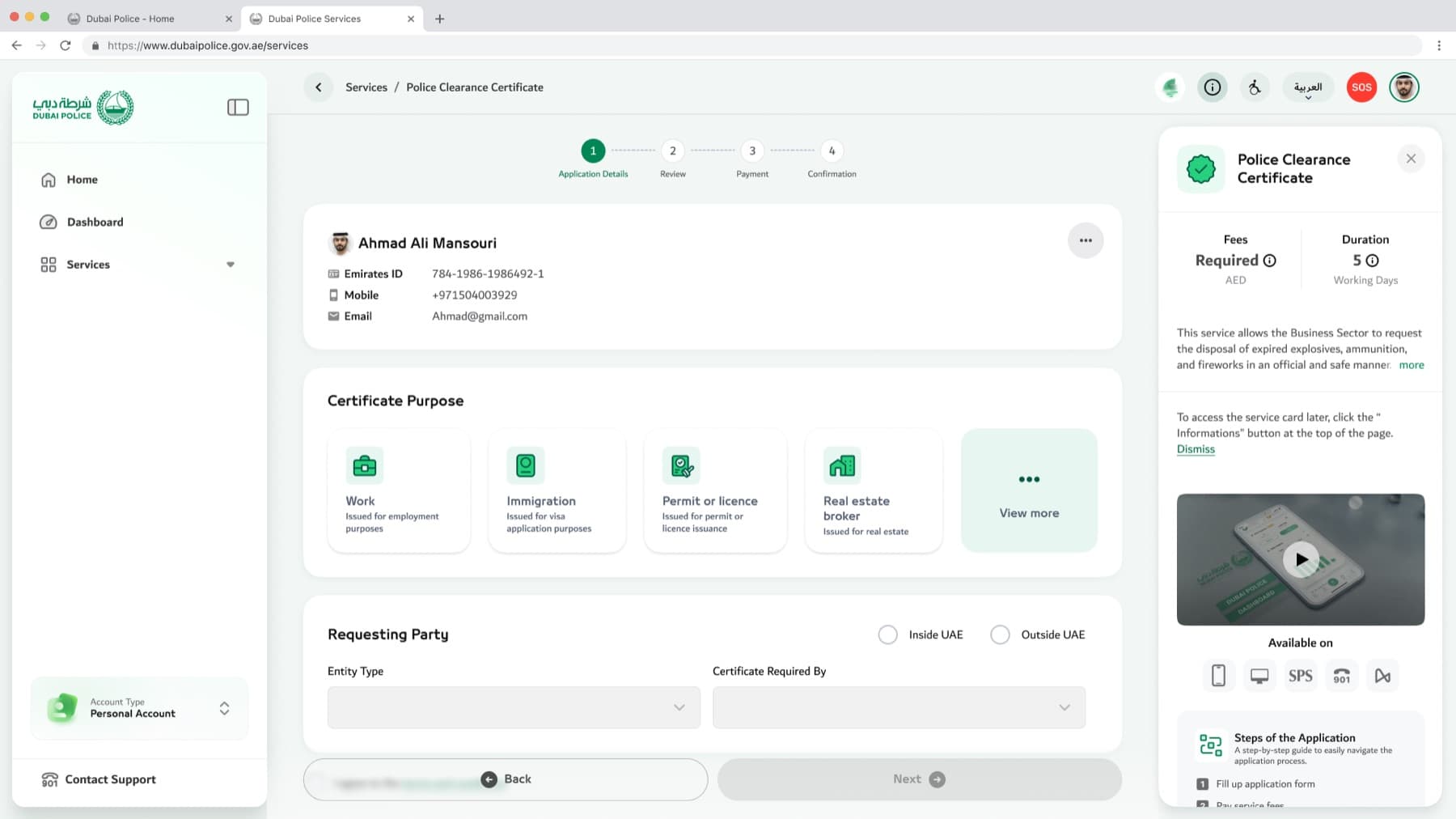
Identity arrives pre-filled from UAEPASS - the applicant only chooses a certificate purpose - 02
Visitor
Inside UAEUAEPASS- Details
- Fingerprint
- Review
- Payment
- Confirmation
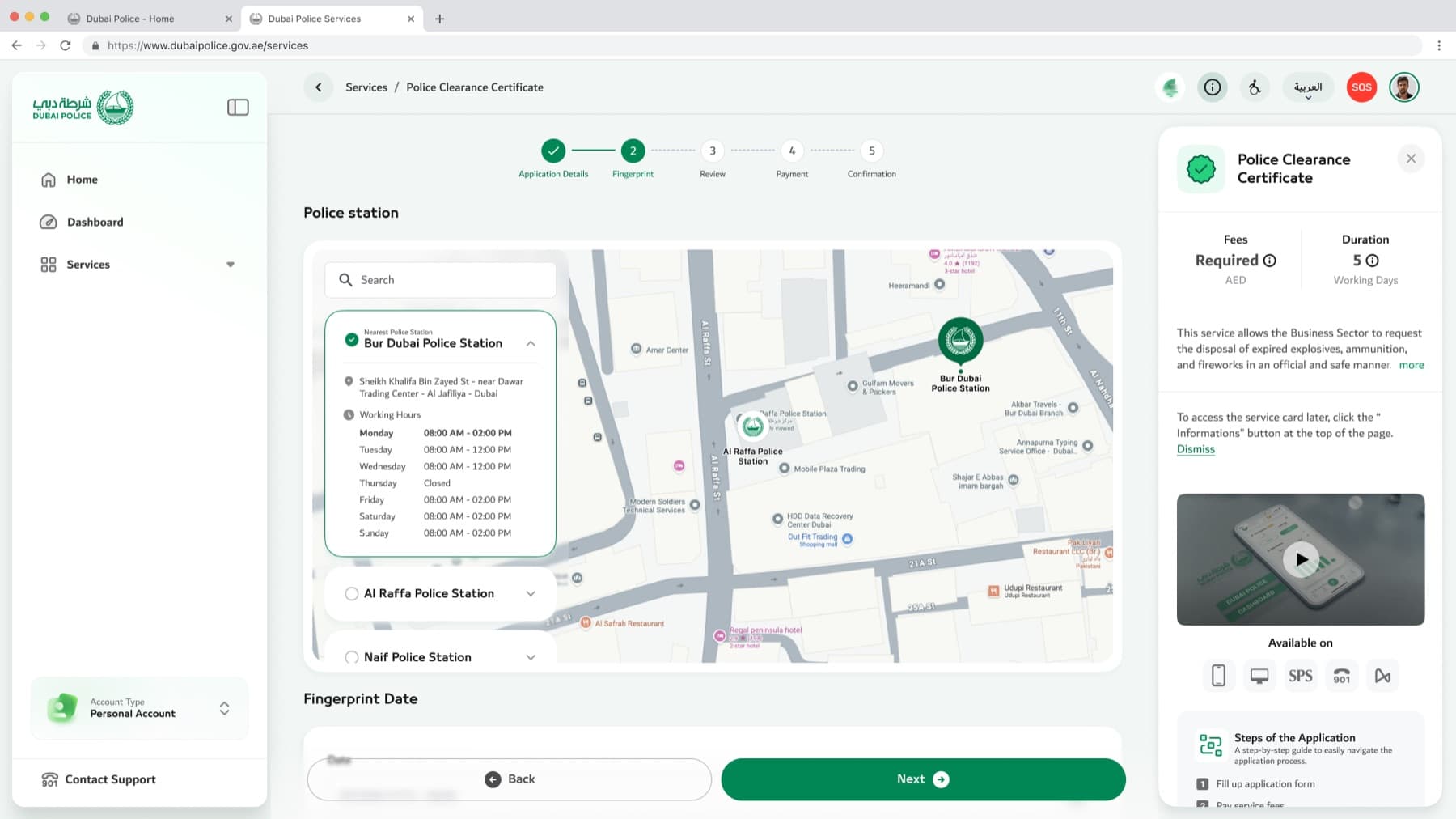
A fingerprint appointment step only visitors see - booked inside the same flow - 03
Overseas guest
Outside UAENot signed in- Details
- Documents
- Review
- Payment
- Confirmation
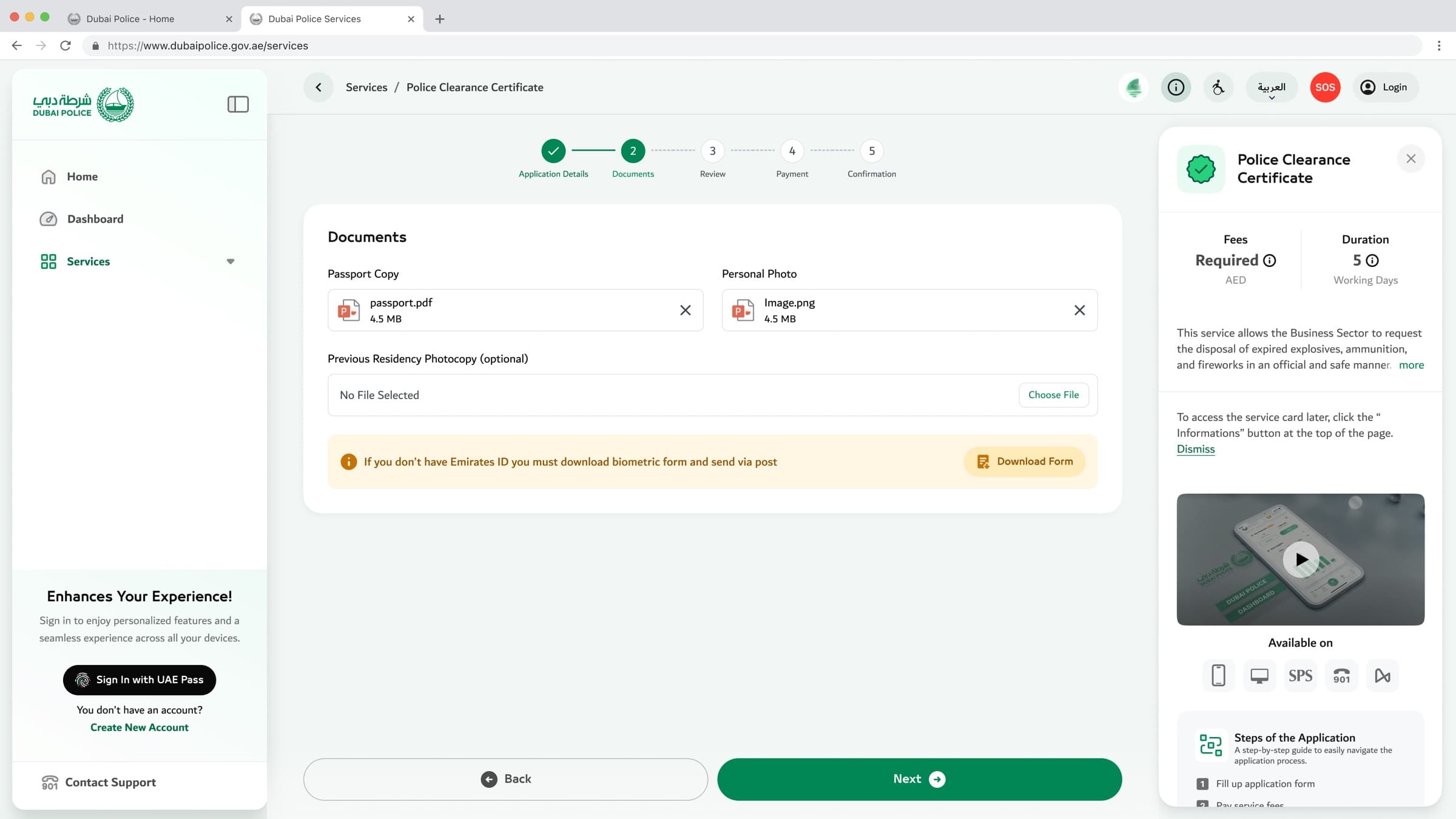
With no identity token to draw on, documents carry the proof - passport, photo and an optional prior-residency copy - 04
Business workspace
AnyUAEPASS- Details
- Documents
- Review
- Payment
- Confirmation
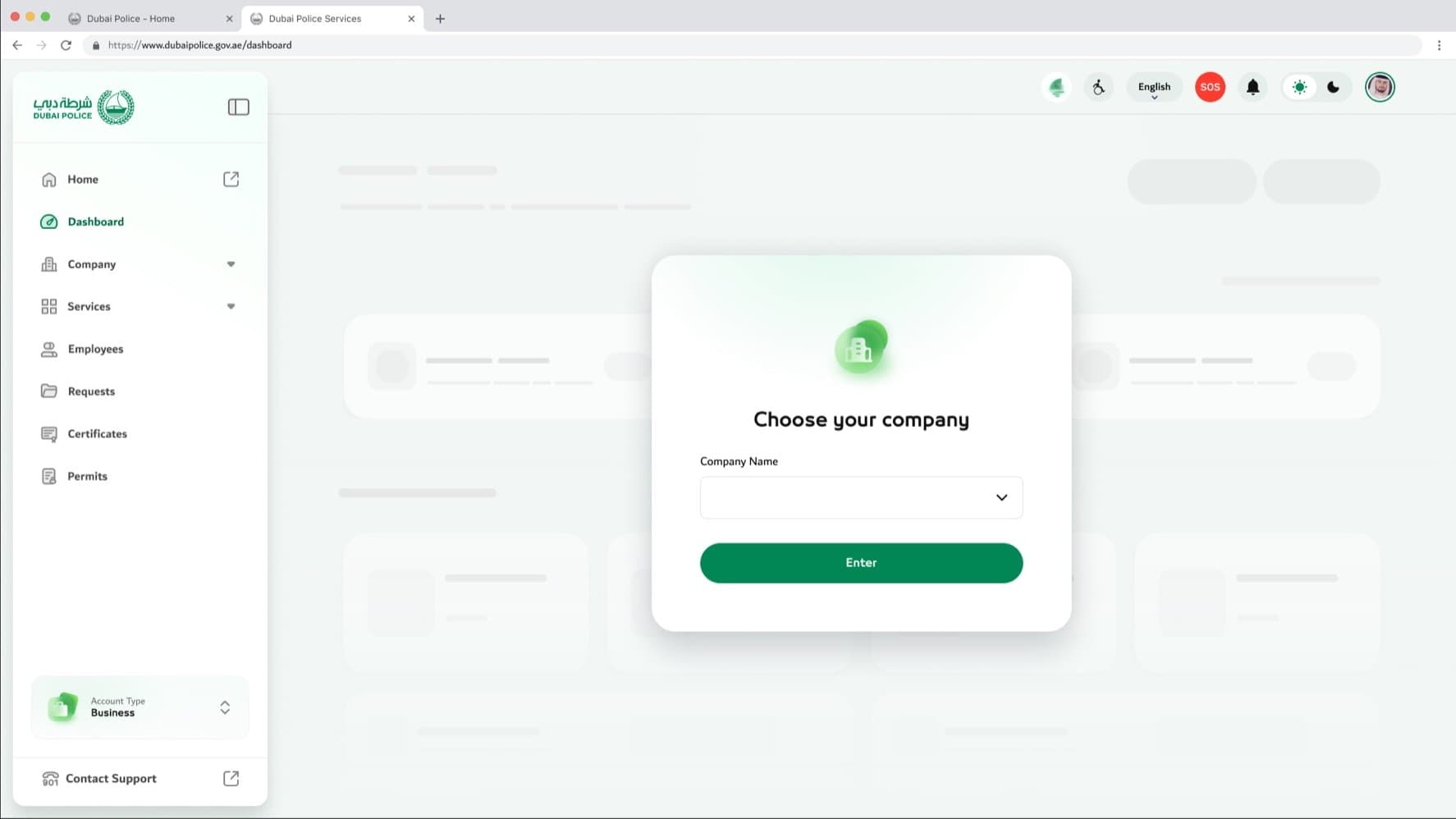
A company dashboard - every request tracked in one place 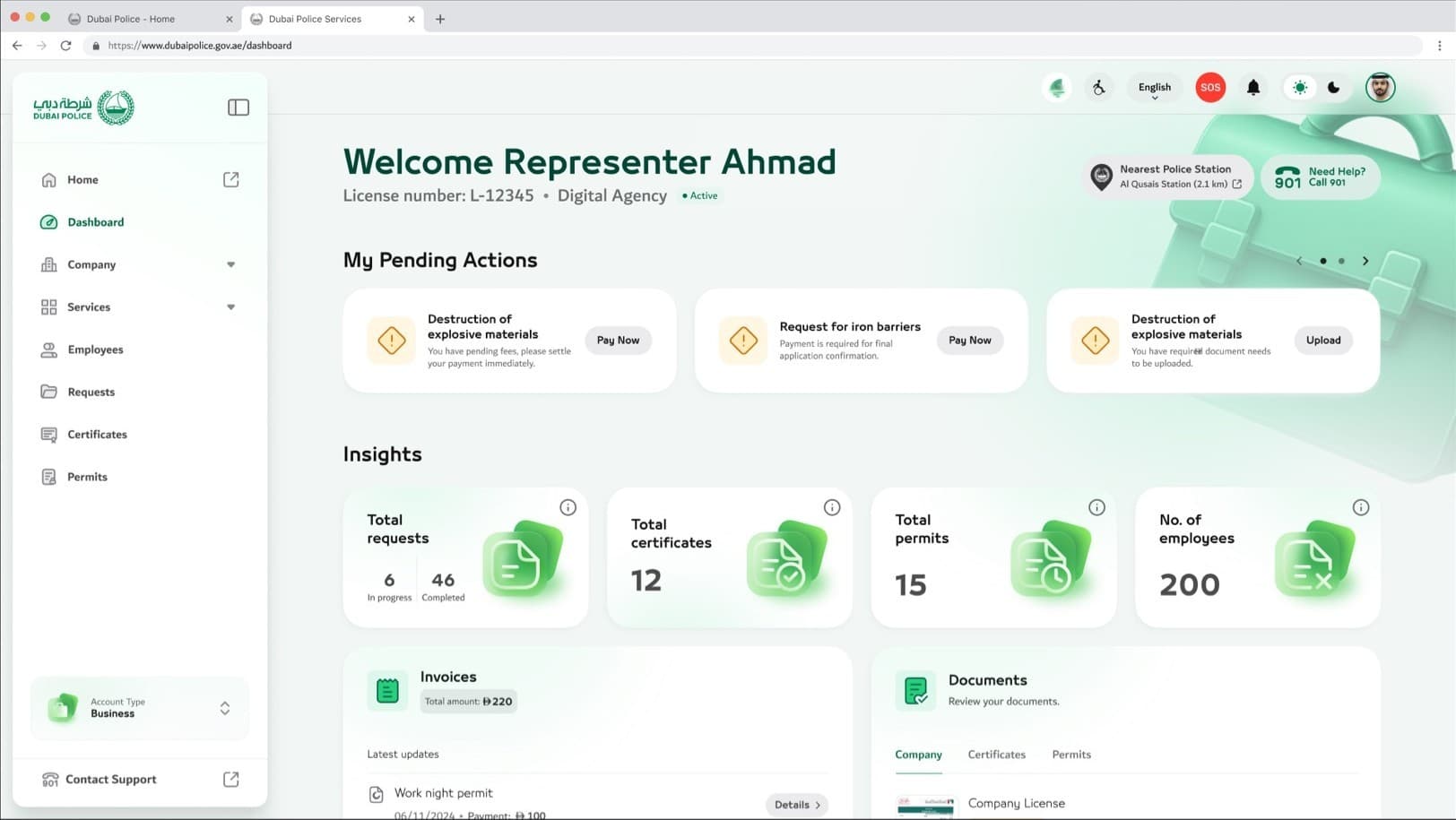
Business account view - ten-finger fingerprint status, appointments and total requests
07
Outcome · 3 months post-launchThe numbers moved.
- FORM ACCURACY−72%
Re-submission errors
- DIGITAL ADOPTION−68%
In-person counter visits
- DEFLECTION−51%
Post-submission support calls
* Indicative - pending publication of post-launch dashboard.
08
ReflectionThe applicant who can't authenticate - the guest applying from outside the UAE - set the bar for the whole service.
Designing that path first meant nothing could be assumed from an identity token, which forced clarity into every other journey.
- Journey matrix
- Service blueprint
- Adaptive routing
- Component library
Next case study
01 · DUBAI POLICE